Avoid hidden rubbish removal charges in Knightsbridge
Posted on 02/06/2026
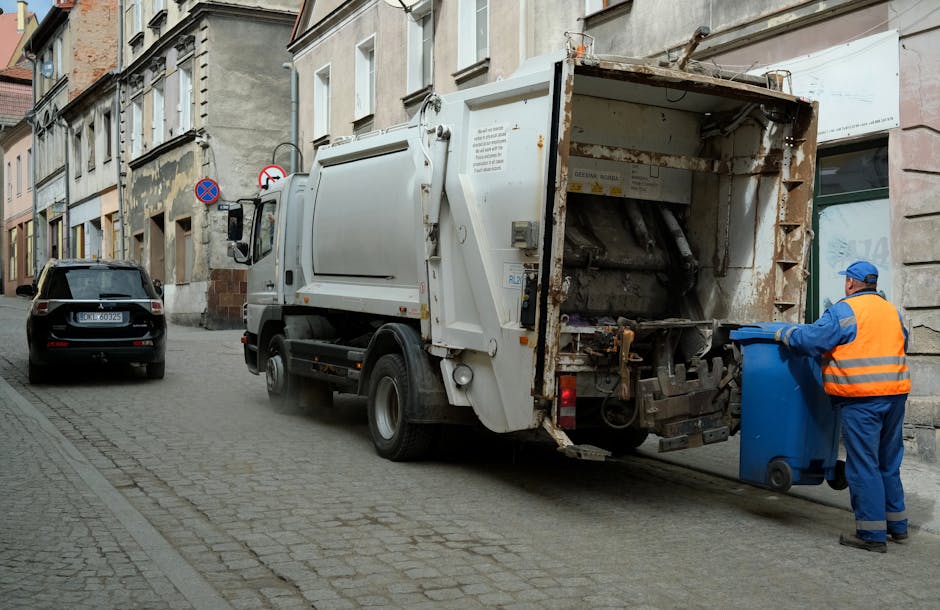
If you have ever booked rubbish removal and then watched the final bill quietly creep upward, you will know the feeling: mildly annoyed, slightly suspicious, and now staring at a receipt that makes no sense. In Knightsbridge, where access can be tight, parking can be awkward, and properties range from elegant flats to larger homes and commercial spaces, hidden rubbish removal charges can catch people out fast. This guide shows you how to spot them early, compare quotes properly, and keep your waste collection transparent from the first call to the final uplift.
Whether you are clearing a flat near Sloane Street, dealing with bulky furniture, or arranging a full house clearance, the goal is simple: know what you are paying for before anyone turns up. Let's get into it.
- Why this matters in Knightsbridge
- How rubbish removal pricing usually works
- Key benefits of transparent pricing
- Who needs this and when it makes sense
- Step-by-step guidance
- Expert tips for better results
- Common mistakes to avoid
- Tools, resources and recommendations
- Law, compliance and best practice
- Options and comparison table
- Real-world example
- Practical checklist
- Conclusion
- Frequently asked questions
Why Avoid hidden rubbish removal charges in Knightsbridge Matters
Rubbish removal should feel straightforward. You describe the waste, the team gives you a price, and the job gets done. But hidden charges often appear when the quote is too vague, the job was not assessed properly, or the provider leaves the awkward bits until the end. In an area like Knightsbridge, that can be especially frustrating because local jobs often involve stairs, basement access, controlled entry, limited loading space, or time-sensitive collections.
Truth be told, many complaints about rubbish removal do not come from the base price itself. They come from the extras: access fees, labour surcharges, waiting time, parking costs, bulky item add-ons, or disposal fees that were never clearly explained. When that happens, you are not comparing like for like anymore. You are comparing a neat headline figure against a messy final invoice. Not ideal.
This matters for households, landlords, estate managers, office teams, and anyone clearing property in SW1X. It also matters if you are booking a service around a move, a refurb, or a quick turnaround. A cheap looking quote can become expensive surprisingly quickly. And let's face it, nobody wants a surprise charge when they are already dealing with a flat full of cardboard, a broken wardrobe, or three bags too many after a weekend clear-out.
If you want to understand the broader service range before booking, the services overview is a useful place to get your bearings. It helps you see how different types of collections are usually handled, from general rubbish to more specialised clearances.
How Avoid hidden rubbish removal charges in Knightsbridge Works
The basic idea is simple: make sure the price is based on a clear scope of work, not on guesswork. Good rubbish removal pricing usually depends on what is being removed, how much there is, where it is located, and how difficult it is to collect. If a provider does not ask those questions up front, that is already a small warning light.
In practice, a transparent quote should explain what is included. That may cover labour, loading, transport, disposal, and standard access assumptions. It should also say what might cost more. For example, a basement flat with no lift may require extra labour time. A bulky sofa tucked behind tight stairwells may take longer than a single room of bagged waste. A mix of recycling, general waste, and electrical items can also affect the disposal route.
The best providers do not hide those details in tiny print or save them for the end. They ask questions early and give you a clear expectation of the total. That is the standard to look for, especially if you are arranging rubbish collection in Knightsbridge for a busy household or a property with limited access.
Another part of how it works is the on-site assessment. Sometimes an estimate is given remotely, but a fair price depends on accurate information. A quick photo can help. So can a brief list of items. If the provider says they need to confirm the final price after seeing the load, that is not necessarily a bad sign. The key question is whether they explain the basis of the adjustment before they start lifting. That small detail makes a big difference.
Key Benefits and Practical Advantages
Transparent pricing does more than keep your wallet calm. It also makes the whole job smoother. You know what to expect, the team knows what to bring, and the collection is less likely to stall because of a last-minute disagreement. Nice, boring, efficient. Exactly what you want, really.
- Fewer surprises: you can budget properly and avoid awkward end-of-job add-ons.
- Faster decisions: clear pricing makes it easier to compare options and book quickly.
- Better job planning: the right vehicle, labour and time slot can be arranged first time.
- Reduced dispute risk: when the quote is specific, there is less room for misunderstandings.
- More trust: a transparent provider usually communicates better overall.
There is also a practical advantage that people sometimes overlook: clear pricing often leads to better outcomes for mixed waste. If you are clearing furniture, appliances, or office items, a provider that explains how each part of the job affects the quote is usually the one that will also handle the waste more responsibly.
If sustainability matters to you, it is worth checking how items are sorted and processed. The recycling and sustainability page gives a clearer sense of how responsible disposal is approached, which can be useful if you want both fair pricing and a lower environmental impact.
Who This Is For and When It Makes Sense
This is for anyone who wants a fair, predictable rubbish removal experience in Knightsbridge. That includes homeowners, tenants, landlords, letting agents, office managers, concierge teams, and developers. It is also especially relevant if your waste is not just a few bin bags.
Here are the situations where hidden charges tend to appear most often:
- Flat clearances: lifts, stairs, access codes, and narrow hallways can all affect the job.
- Bulky furniture removal: large items often take more handling than people expect.
- Builders' waste: rubble, timber, plasterboard, and mixed construction waste can change the price structure.
- Office clearances: desks, chairs, cabinets, screens, and paperwork may need sorting and secure handling.
- White goods disposal: fridges and freezers can involve specialist handling or recycling steps.
- House or loft clearance: the total volume can be difficult to judge without a careful look.
If that sounds familiar, you are not alone. A lot of people in the area are dealing with time pressure, building access rules, and the usual London headache of "where do we even park for this?". If you are clearing a property in a hurry, the local guide on same-day rubbish collection near Harrods can help you think through the practical side of a fast turnaround.
And if you are handling a property move or sale, it may also be useful to read about living in Knightsbridge or the area's property context through a Knightsbridge real estate guide. Those pieces are not about waste removal directly, but they give useful local background, and context matters more than people admit.
Step-by-Step Guidance
If you want to avoid hidden rubbish removal charges, follow a simple process. It does not need to be complicated. In fact, the simpler the better.
- List exactly what needs removing. Include item types, rough quantities, and whether anything is heavy, awkward, fragile, or electrical.
- Take clear photos. A few wide shots plus close-ups of bulky items can save a lot of back-and-forth.
- Explain access properly. Mention stairs, lifts, loading restrictions, basement access, controlled entry, or distance from the vehicle.
- Ask what the quote includes. Labour, loading, disposal, VAT if applicable, parking, and any access assumptions should be clear.
- Ask what could change the price. A good provider should say this plainly, not dance around it.
- Request confirmation in writing. Email or message confirmation is helpful. It gives you a reference point later.
- Check the arrival window and waiting policy. If a collection is delayed because access is blocked, who carries the cost?
- Confirm disposal route for specialist items. Fridges, mattresses, electricals, and construction waste may need different handling.
- Review the final figure before the team starts. If something has changed, ask why. Calmly. No need for theatre.
- Keep the paperwork. Receipt, booking notes, and confirmation messages are worth saving.
A small tip from experience: if a quote sounds unusually low, ask the provider to explain exactly how they arrived at it. A low figure is not automatically bad, but if it is based on assumptions that do not match your property, the final bill can be a different story altogether.
Expert Tips for Better Results
Here is where a little local awareness pays off. Knightsbridge is not the easiest place for collection work, and that is not a criticism, just reality. The streets are busy, properties are varied, and access can be as much of a pricing factor as the rubbish itself.
- Always mention stairs and lifts. "Ground floor" is helpful, but only if it truly means a direct load-out.
- Separate heavy items from lighter waste. A mattress and a bag of paper are not equal in labour terms.
- Ask whether recycling is included. Some providers separate waste carefully, which can affect both the process and cost structure.
- Choose the right service type. A full house clearance is not the same as a small domestic collection.
- Book with enough time for access. Tight windows create stress, and stress tends to create mistakes.
- Check payment method and invoice clarity. Secure payment and clear receipts matter, especially for commercial jobs.
The pricing and quotes page is also worth reading if you want to understand how a reputable provider frames costs before any work begins. That tends to be where the honest details live.
One more thing: if you are arranging clearance for a flat, the smaller the job looks from the outside, the easier it is to underestimate the time involved. A couple of heavy pieces, a narrow staircase, and one awkward landing can add up. By 8:30 in the morning, the whole building may already be humming, and nobody wants a delay while a sofa refuses to turn the corner. We have all seen it.

Common Mistakes to Avoid
Most hidden charges are not magic. They are the result of missing details, vague quotes, or assumptions that were never checked. The good news? Most of them are avoidable.
- Accepting a vague "starting from" price without asking what it covers.
- Not declaring bulky or heavy items because you assume they "obviously" count as standard waste.
- Forgetting access constraints such as no lift, restricted parking, or long carrying distances.
- Assuming all waste is treated the same when electricals, builders' waste, and general rubbish can differ.
- Not checking the final quote in writing before the team begins.
- Choosing solely on price and ignoring clarity, compliance, and insurance.
Another common slip is failing to ask whether the provider is appropriately licensed or compliant for waste handling. That may sound dry, but it matters. If waste is collected and disposed of improperly, it can create headaches far beyond the initial bill.
For more on what to look for, the waste carrier licence and compliance page is a sensible place to check the provider's standards and responsibilities.
Tools, Resources and Recommendations
You do not need fancy tools to protect yourself from hidden charges. A phone, a few photos, and a basic checklist are usually enough. Still, a little preparation helps a great deal.
| Tool or resource | Why it helps | What to look for |
|---|---|---|
| Photo set of the waste | Helps the provider estimate volume and difficulty | Wide shots, close-ups, and access points |
| Item list | Reduces omissions and surprise add-ons | Furniture, appliances, bags, builders' waste, etc. |
| Booking confirmation | Creates a clear record of the agreed scope | Time, access notes, included services, total price |
| Payment confirmation | Useful if there is a billing query later | Receipt or invoice with a breakdown if needed |
| Service information pages | Helps compare service type and expectations | Domestic, commercial, furniture, white goods, clearance options |
In a practical sense, the best recommendation is to compare more than one provider when the job is non-urgent. Not because every cheap quote is bad, and not because every expensive one is good. Simply because comparing a couple of clear quotes gives you a better sense of the market and helps reveal who is being transparent.
If you are weighing up different kinds of clearances, these pages can help you narrow down what you actually need: house clearance in Knightsbridge, office clearance, builders' waste disposal, furniture removal, and white goods and appliance disposal.
Law, Compliance, Standards, or Best Practice
Waste removal is not just about convenience. It sits inside a wider framework of responsible handling, correct disposal, and proper business conduct. In the UK, waste carriers should be properly registered where required, and waste should be taken to appropriate facilities rather than dumped or mishandled. You do not need to become a compliance expert, but it is sensible to ask a few basic questions before booking.
From a customer's point of view, the practical best practices are:
- check that the provider can explain how waste is handled;
- ask for clear pricing terms before collection starts;
- confirm whether specialist items are included or priced separately;
- avoid handing waste to anyone who cannot give straightforward answers;
- keep your booking and payment records.
Insurance and safety also matter. A team that is moving heavy items through a shared stairwell, a smart entrance hall, or a tight pavement area should work carefully and sensibly. The insurance and safety page is a useful reference if you want reassurance that the provider takes risk management seriously.
And for payment peace of mind, it helps if the process is straightforward and secure. The payment and security page explains that side of the service in plain terms, which is exactly what most people want, to be fair.
Options, Methods, or Comparison Table
There is more than one way to arrange rubbish removal, and the best option depends on volume, urgency, and how much certainty you want on cost. Here is a simple comparison.
| Option | Best for | Pros | Watch-outs |
|---|---|---|---|
| Fixed quote after assessment | Clear, defined loads | Easier budgeting, fewer surprises | Needs accurate information up front |
| Estimate based on photos | Typical household or mixed waste | Quick and convenient | Can change if access or volume is underestimated |
| On-site final quote | Complex jobs or uncertain loads | Most accurate before removal begins | May take a little longer to confirm |
| Same-day collection | Urgent clear-outs | Fast turnaround | Availability and access can affect price |
For urgent jobs, local context matters. If you need a quick pickup near a major retail or transport hub, you may find the scheduling tighter than expected. In that case, checking a relevant local guide such as bulky waste pickup in SW1X can help you understand the pace and practical constraints of the area.
If you are dealing with flats or apartment-style access, the article on rubbish clearance for flats on Sloane Street is also relevant, because pricing often becomes clearer once access and building rules are factored in properly.
Case Study or Real-World Example
Here is a realistic example. A resident in Knightsbridge needs to clear a flat before a lease handover. The job includes an old sofa, a dining table, a few chairs, two lamps, several bags of mixed household waste, and one fridge freezer in the kitchen. On paper, it sounds fairly routine.
But there are a few twists: the flat is on an upper floor, the lift is small, the building has limited loading access, and the fridge freezer needs proper disposal handling. If the customer only asks for "a rubbish quote" and nothing else, the first price may look appealing. Then, on collection day, the team discovers the access limitations and the special item handling, and the cost shifts.
That is exactly the kind of situation where hidden charges appear. Not because anyone is trying to be clever necessarily, but because the original quote was incomplete. A better approach would have been to share photos, list the fridge separately, mention the floor level, and ask whether the quote was inclusive of labour and disposal.
In a better-run version of the same job, the customer gets a quote that reflects the actual work. The team arrives with the right vehicle and time allocation. The removal happens without a lengthy back-and-forth at the door. Job done, no drama, everyone moves on with their day. A bit unglamorous, sure. But pleasantly boring is underrated.
Practical Checklist
Use this quick checklist before you book. It is simple, but it catches a lot.
- Have I listed all items to be removed?
- Have I included bulky, heavy, or electrical items separately?
- Have I explained access clearly?
- Have I asked what the price includes?
- Have I asked what could trigger extra charges?
- Have I requested the quote in writing?
- Have I checked payment terms and receipt details?
- Have I confirmed the provider's compliance and safety approach?
- Have I considered whether recycling or specialist disposal is needed?
- Have I compared at least one alternative if time allows?
If you can tick most of those off, you are in a much stronger position. And if a provider pushes back on basic questions, that says a lot all by itself.
Conclusion
Avoiding hidden rubbish removal charges in Knightsbridge comes down to clarity, preparation, and choosing a provider that communicates properly. You do not need to overcomplicate it. Just be specific about the waste, the access, the timing, and the type of service you need. Ask what is included. Ask what is not. Get it in writing if you can.
That little bit of care saves money, saves time, and saves the awkward feeling of arguing over a bill at the end of a long day. More importantly, it helps you choose a service that feels professional from the start, which is what most people actually want. Fair price, no surprises, job done.
Get a free quote today and see how much you can save.
When the details are clear, the whole process feels lighter. And sometimes, honestly, that is the best result of all.



 Tipper Van - Rubbish Clearance and Rubbish Removal Prices in Knightsbridge, SW1
 Luton Van - Rubbish Clearance and Rubbish Removal Prices in Knightsbridge, SW1